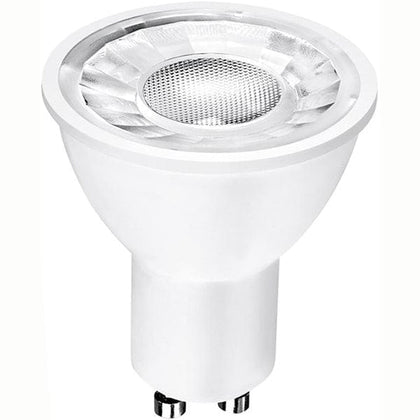
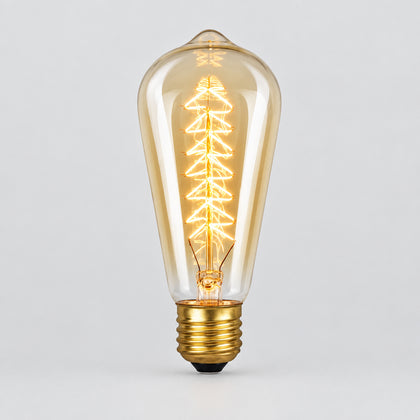
GU10 LED Spotlight Bulb — Dimmable, 36 / 54 / 72 LED, Trailing Edge Compatible
A dimmable GU10 LED spotlight bulb available in three output levels — 36, 54 or 72 LEDs — for use in recessed downlights, track lighting, and surface-mounted GU10 fittings. Compatible with trailing edge (LED) dimmers. CE, RoHS and CCC certified for EU and UK mains (220–240V).
Technical Specifications
| Light source | LED — integrated array |
| Cap / Socket | GU10 (twist-and-lock, 2-pin) |
| Available variants | 36 LED · 54 LED · 72 LED |
| Voltage | 220–240V / 50Hz |
| Dimmable | Yes — trailing edge (LED) dimmer required |
| Certifications | CE (EU / UK), RoHS, CCC |
GU10 LED Spotlight — Directional Light, Dimmer Control, Three Output Levels
Unlike omnidirectional globe or filament bulbs, the GU10 spotlight is a directional light source — it concentrates output into a focused beam, making it the right choice for recessed ceiling downlights, kitchen task lighting, bathroom vanity spots, and track systems where you need light aimed at a specific surface rather than diffused across a room. The three LED counts — 36, 54 and 72 — allow you to match output to the room and fitting: 36 LED for accent or secondary lighting, 54 LED for standard room illumination, 72 LED for higher-output task or kitchen use. All three variants are dimmable, but require a trailing edge (LED-compatible) dimmer — if your existing dimmer is a leading edge (traditional) type, it will need to be replaced before these bulbs will dim correctly. A qualified electrician can confirm which type you have.
GU10 fittings use a twist-and-lock mechanism — insert the bulb, rotate 90°, and it locks in place. No tools required. This is a direct replacement for any existing GU10 halogen or LED spotlight. If you are upgrading from halogen GU10s, switching to LED will reduce energy consumption significantly while maintaining the same directional beam pattern. Browse our spotlights and downlights collection for compatible fittings, or read our indoor lighting guide for advice on layering task and ambient light.
Common Questions
How do I know if my dimmer switch is trailing edge or leading edge?
+
Leading edge dimmers (also called traditional or resistive dimmers) were designed for incandescent and halogen bulbs and are the most common type in older installations. Trailing edge dimmers are designed for LED and electronic loads. If your dimmer is more than 5–10 years old and was installed with halogen bulbs, it is almost certainly leading edge and will need to be replaced. Check the dimmer’s label or packaging, or ask a qualified electrician — using a leading edge dimmer with these bulbs will cause flickering, buzzing, or failure to dim smoothly.
Which LED count should I choose — 36, 54 or 72?
+
As a general guide: choose 36 LED for accent lighting, display shelving, or secondary spots in a room that already has other light sources. Choose 54 LED for standard room downlights in living rooms, bedrooms, or hallways. Choose 72 LED for kitchens, bathrooms, or any space where you need higher task-level brightness from a single fitting. If you are replacing existing GU10 halogens, match the wattage equivalent listed on your current bulbs to select the closest LED output.
Will this fit my existing GU10 downlight fitting?
+
Yes — GU10 is a standardised socket type. Any GU10 bulb will fit any GU10 fitting, regardless of brand. The twist-and-lock mechanism is universal: insert the bulb with the pins aligned, push in gently, and rotate 90° clockwise to lock. No tools or adapters are needed. This is a direct replacement for any GU10 halogen or LED bulb currently in your fitting.
Can I use these bulbs in a bathroom?
+
These bulbs carry no IP rating of their own. For bathroom use, the IP protection must come from the fitting — the downlight housing itself must be IP44 rated (minimum) for zone 2 use, or IP65 for zone 1 (directly above a bath or shower). The bulb sits inside the fitting and is protected by it. If your bathroom downlights are already IP-rated, these GU10 bulbs can be used as replacements without issue.
Is this a direct replacement for a GU10 halogen bulb?
+
Yes — the GU10 cap is identical between halogen and LED versions, so this bulb fits directly into any existing GU10 fitting. The key difference is energy consumption: a typical GU10 halogen runs at 35–50W; this LED version delivers comparable brightness at a fraction of the wattage. The beam angle and directional output are similar. The only change you may need to make is replacing a leading edge dimmer with a trailing edge (LED-compatible) one if you want to use the dimming function.
Explore our full range of Spotlights & Downlights or browse our LED Bulbs collection. Free delivery on orders over €50. 30-day returns.