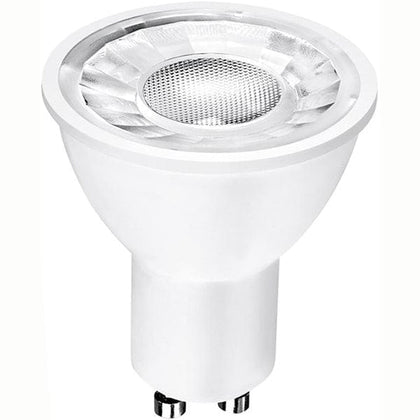
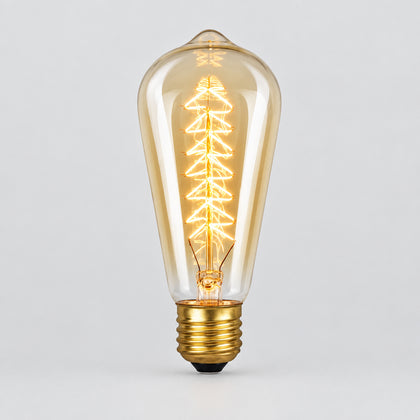
GU10 LED Spotlight Bulb — 48, 60 or 80 LEDs, Warm & Cool White, 220V, 10,000h
GU10 LED spotlight bulb available in three LED densities (48, 60 or 80 LEDs) and two colour temperatures — warm white (2700–3000K) and cool white (6000–6500K). The GU10 twist-and-lock cap is the standard for recessed downlights, surface-mounted spots, and track lighting across kitchens, bathrooms, hallways, and living rooms. More LEDs = higher lumen output and a brighter, more even beam. Integrated LED — no bulb to buy separately.
Technical specifications
| Light source | Integrated LED array — non-replaceable |
| Cap type | GU10 (twist-and-lock, 2-pin bayonet) |
| LED count options | 48 LEDs / 60 LEDs / 80 LEDs |
| Colour temperature | Warm white 2700–3000K / Cool white 6000–6500K |
| Luminous flux | 250–499 lm (varies by LED count) |
| Voltage | 220–240V (standard mains) |
| Beam angle | Directional spotlight beam |
| Rated lifespan | 10,000 hours |
| Dimmable | Verify before ordering if you have a dimmer switch |
| IP rating | IP20 — dry indoor use only (unless fitting is IP-rated) |
| Certifications | CE, RoHS |
GU10 LED Spotlight — Directional light, 48 vs 60 vs 80 LEDs & the right colour temperature by room
The GU10 is a fundamentally different bulb from the E27 or E14 globe and filament range — it is a directional spotlight, not an omnidirectional source. Where a filament globe casts light in all directions, the GU10 concentrates its output into a focused beam aimed downward or at a specific surface. This makes it the right choice for task lighting (kitchen worktops, bathroom vanities, reading areas), accent lighting (artwork, shelving, architectural features), and recessed ceiling grids where even, downward illumination is the goal. The LED count determines output: 48 LEDs produces a softer, more ambient spot; 60 LEDs is the mid-range option for general task lighting; 80 LEDs delivers the brightest, most even beam and is the right choice for kitchens and workspaces where output matters. Colour temperature choice is more consequential in a GU10 than in a decorative bulb — because the beam is directional, the colour temperature is concentrated on the surface it illuminates. Warm white (2700–3000K) suits living rooms, bedrooms, and dining areas where a relaxed atmosphere is the priority. Cool white (6000–6500K) suits kitchens, bathrooms, and home offices where clarity and task performance are more important than warmth. At 10,000 rated hours, this bulb has a shorter lifespan than LED filament alternatives — honest to note, and still significantly longer than the halogen GU10 it replaces (typically 2,000 hours).
Direct GU10 twist-and-lock replacement — push in and rotate to lock, no tools required. IP20 rated — if your fitting is in a bathroom or wet area, check that the fitting itself carries the appropriate IP rating; the bulb IP rating does not override the fitting’s IP requirement. Browse our full LED Bulbs range or read our interior lighting tips for guidance on mixing spotlight and ambient light sources in the same room.
Common questions
How do I know if my fitting takes GU10 and not MR16 or GU5.3?
+
GU10 bulbs have two pins with a wider base that locks into the fitting with a quarter-turn twist. MR16 / GU5.3 bulbs have two thin straight pins and require a 12V transformer — they do not twist-lock. Check the existing bulb or the fitting label: GU10 runs on 220–240V mains; MR16 runs on 12V. If your fitting has a transformer box above the ceiling, it is almost certainly MR16, not GU10. If it connects directly to mains wiring with no transformer, it is GU10.
What is the practical difference between 48, 60 and 80 LEDs?
+
More LEDs = more light-emitting elements = higher lumen output and a more even, uniform beam. 48 LEDs is suitable for accent lighting and softer ambient spots. 60 LEDs is the general-purpose option for kitchens and living rooms. 80 LEDs is the brightest option — choose it for task-critical areas like kitchen worktops, bathroom vanities, or home offices where you need maximum output from a single GU10 spot.
Can I use this GU10 in a bathroom downlight?
+
This bulb is rated IP20 — suitable for dry indoor use only. Whether it can be used in a bathroom depends on the IP rating of the fitting, not the bulb. In a bathroom, the fitting must carry the appropriate IP rating for its zone (IP44 minimum for Zone 2, IP65 for Zone 1). If your fitting is IP44 or higher and accepts GU10 bulbs, this bulb can be installed inside it. If the fitting is open and unprotected, do not use in a wet or humid area.
Will this LED GU10 work with my existing dimmer switch?
+
GU10 LED compatibility with dimmer switches depends on the dimmer type. Many older dimmers designed for halogen GU10 bulbs are not compatible with LED replacements and will cause flickering, buzzing, or failure to dim smoothly. Check whether your dimmer is LED-compatible before ordering. If it is not, replace the dimmer with an LED-compatible trailing-edge dimmer, or use this bulb on a standard on/off circuit.
How many GU10 spots do I need to light a kitchen properly?
+
A general rule for kitchen downlights is one GU10 spot per 1–1.5m² of ceiling area, positioned to cover worktops and key task areas without creating dark zones between spots. For a 12m² kitchen, 8–12 spots is a typical range. Use 60 or 80 LEDs for worktop areas and 48 LEDs for softer ambient zones. Supplement with under-cabinet LED strips for direct worktop illumination where ceiling spots cast shadows from overhead cupboards.
Browse our full LED Bulbs collection or read our interior lighting tips. Free delivery on orders over €50 — easy returns if it’s not the right fit.