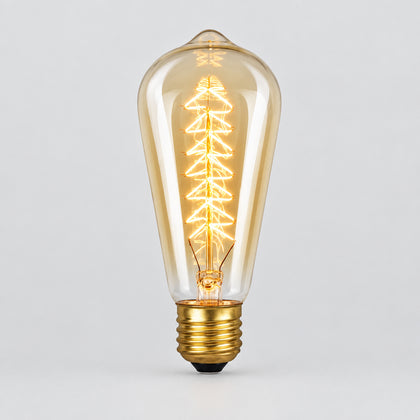
E27 LED Tube Filament Bulb — 4W, 2300K Amber, 350lm, H11cm, Dimmable, 20,000h
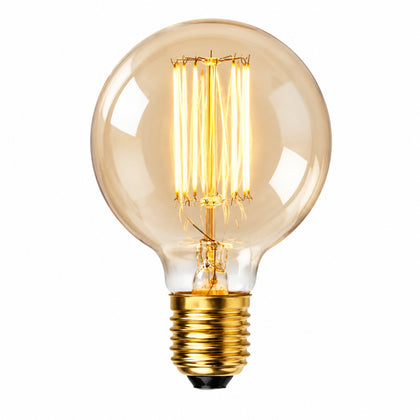
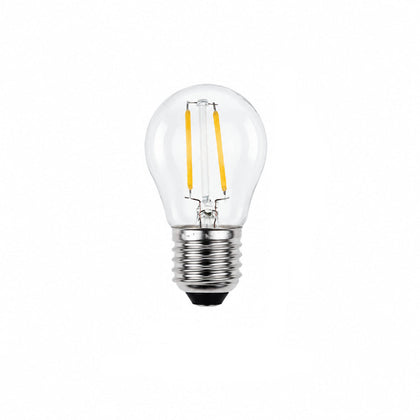
An E27 LED tube filament bulb with a visible filament — 4W, 2300K amber candlelight, 350lm, Ø4.5cm × H11cm. Dimmable with a trailing edge dimmer. 20,000-hour rated lifetime. 220–240V.
Technical specifications
| Cap type | E27 (large Edison screw) |
| Wattage | 4W |
| Colour temperature | 2300K — amber candlelight |
| Luminous flux | 350lm |
| Dimensions | Ø4.5cm × H11cm |
| Voltage | 220–240V |
| Dimmable | Yes — trailing edge dimmer required |
| Rated lifetime | 20,000 hours |
2300K amber, tube form — compact filament LED, exposed fittings and enclosed shades
The tube shape (Ø4.5cm × H11cm) is more compact than the teardrop (H14cm × Ø6.5cm) and fits more easily into fittings with smaller shade openings or tighter internal clearances. The visible filament runs the length of the tube, giving a linear glow that looks particularly good in exposed-bulb wall lights, adjustable arm lamps, and open chandeliers. Like the teardrop version, this bulb is 2300K — an amber, candlelight tone that is noticeably warmer than the standard 2700K warm white. At 350lm and 4W, it is suited to accent and ambient lighting rather than task lighting. Dimmable with a trailing edge dimmer switch; a standard leading edge dimmer may cause flickering. Rated for 20,000 hours. 220–240V only — not suitable for 110V circuits.
Choose the tube shape when the fitting has a narrower shade opening or when a more linear filament look is preferred. Choose the teardrop when the fitting is open and the classic Edison globe shape is part of the aesthetic. Both are 4W, 2300K, and 350lm. Browse the full LED bulbs collection or read our guide to buying lights online for bulb selection advice.
Common questions
What is the difference between the tube and teardrop versions?
+
Both are E27, 4W, 2300K, and 350lm. The tube (Ø4.5cm × H11cm) is more compact and fits into fittings with smaller shade openings. The teardrop (H14cm × Ø6.5cm) is larger and has the classic Edison globe shape — better suited to open fittings where the bulb shape is part of the aesthetic. Choose tube for tighter fittings or a linear filament look; choose teardrop for open fittings where the globe form is visible.
What is the difference between 2300K and 2700K?
+
2300K is an amber, candlelight tone — noticeably warmer and more golden than the standard 2700K warm white. It is best suited to exposed filament fittings where the bulb is visible and the warm colour adds character. Choose 2300K for a vintage or atmospheric look; choose 2700K for a more standard warm white result.
Why does this require a trailing edge dimmer?
+
Most LED filament bulbs work best with a trailing edge (electronic) dimmer switch. A standard leading edge (resistive) dimmer can cause flickering, buzzing, or a reduced dimming range. If you are unsure which type of dimmer you have, check with your electrician before purchasing.
Is 350lm bright enough for a room?
+
350lm is suitable for accent and ambient lighting — it creates a warm, atmospheric glow rather than bright task lighting. For a reading light or work area, you would typically want 400–800lm. For a pendant, decorative wall light, or chandelier arm, 350lm at 2300K gives a very pleasant, warm result.
Can this bulb be used on a 110V circuit?
+
No — this bulb is rated for 220–240V only. It is not suitable for 110V circuits (common in North America). Using it on a 110V circuit may damage the bulb or cause it to underperform.
Browse the LED bulbs collection or read our guide to buying lights online. Free delivery on orders over €50 — easy returns included.